Wednesday Wisdom Blog

Tuning music to Solfeggio frequencies involves adjusting a song so specific notes align with target frequencies like 396 Hz, 417 Hz, or 528 Hz. The process usually involves retuning the project’s reference pitch, using pitch-shift tools, or generating exact drone tones for meditation-style audio. The article explains the difference between traditional solfège singing systems and modern Solfeggio frequency concepts often associated with wellness and sound healing. It also covers practical workflows for MIDI instruments, recorded audio, and multi-frequency projects while highlighting common tuning mistakes to avoid. Although alternative tunings are musically valid, the article notes that scientific evidence supporting specific healing claims for Solfeggio frequencies remains limited.

Royalty-free Solfeggio frequency music is easiest to find in libraries that do two things at once: label tracks by frequency or meditation style, and publish a clear reuse license. The most practical places to start is Meditation Music Library for free downloads. The important step is not just finding a track labeled “528 Hz” or “Solfeggio,” but confirming whether the license covers your exact use, such as commercial work, editing, client delivery, monetized channels, or only use inside a finished production. 

A professional hypnosis script usually follows a clear sequence: pre-talk and informed consent, induction, deepening, goal-focused suggestions or imagery, optional post-hypnotic cues, and re-alerting with debriefing. There is no single universal wording, but contemporary clinical hypnosis training consistently teaches a structured, patient-tailored flow, and professional policy says hypnosis should be delivered by trained clinicians within a treatment plan and with clearly structured induction and termination. 

You can monetize sleep videos on YouTube using royalty-free music, but only if the license clearly allows monetized use and your content meets YouTube’s originality standards. Simply using “royalty-free” music is not enough, creators must ensure they have full commercial rights and that their videos are not repetitive or overly template-based. To succeed, focus on creating unique, value-driven sleep content while properly clearing and managing your music licenses.

You can edit or loop royalty-free meditation music—but only if the license allows modifications and your use stays within its terms. “Royalty-free” doesn’t mean unlimited freedom; it simply means you don’t pay ongoing royalties for approved uses. Most licenses treat editing, looping, and trimming as creating a modified or derivative version of the original track. Some licenses allow these changes for commercial use, while others restrict them to noncommercial projects or prohibit sharing edited versions entirely. Problems usually arise when creators distribute the music as a standalone product or ignore key restrictions like “no derivatives” or “noncommercial only.” To stay safe, always check if your license permits editing and whether your final project format is allowed. When used correctly, edited music can enhance guided meditations, podcasts, and other content without legal issues.

If you play music in your yoga studio, you typically need a license because it counts as a public performance under copyright law. This applies whether the music comes from streaming services, CDs, or personal playlists. To stay compliant, studios usually obtain public performance licenses from organizations like ASCAP, BMI, or SESAC, which cover large catalogs of songs. Understanding your licensing options helps protect your business while creating a better experience for your students.

You can use royalty-free music to create and sell guided meditations, but only if the license allows commercial use and supports narration-based products. Not all royalty-free music is the same, and the specific license terms determine what you’re allowed to do. In most cases, your meditation must be the main product, while the music serves only as background support. Selling music as a standalone product or making it the primary value can violate licensing rules. It’s also important to remember that “royalty-free” doesn’t mean you own the music, it simply means you can use it under certain conditions. Different platforms have different restrictions, so always review the license carefully before publishing. Understanding these rules helps you stay compliant while confidently monetizing your guided meditations.

Understanding the difference between royalty-free, copyright-free, and public domain content is essential for avoiding legal issues when using media. Royalty-free content is still copyrighted, but you can use it under a license without paying ongoing fees. In contrast, copyright-free typically refers to content that has no copyright protection—often meaning it belongs to the public domain. Public domain works can be used freely for any purpose without permission or payment. Confusion between these terms can lead to misuse, unexpected costs, or even copyright violations. Knowing how each type works helps you choose the right content for your projects. When in doubt, always check the license to ensure you’re using content legally and responsibly.

You don’t always need to credit the artist when using royalty-free music—it depends entirely on the license. While royalty-free means you won’t pay ongoing royalties, the creator still owns the copyright. Many paid licenses and subscription-based music libraries allow you to use tracks without attribution.

The ideal length of background music in a meditation should match the full duration of the session to maintain focus and avoid distractions. Whether it’s a short 5-minute reset or a 60-minute deep practice, the music should flow continuously with smooth fades to support relaxation. The article breaks down recommended lengths for different meditation types, from quick daily sessions to sleep meditations. It also explains how music affects attention and why seamless audio matters more than just duration. You’ll learn practical guidelines and common mistakes to avoid when choosing or creating meditation music. Ultimately, the right length is the one that helps the listener stay present without noticing the music itself.

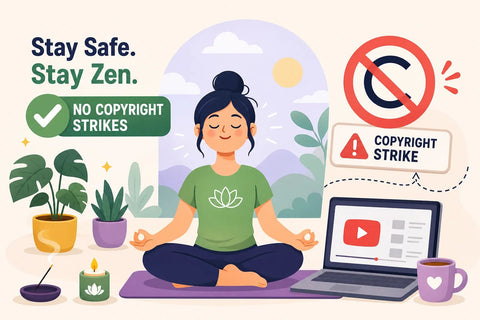
You can use meditation music on YouTube without copyright issues—but only if you have the proper rights. Using copyrighted music without permission can lead to content claims, demonetization, or video removal. The article explains how YouTube’s Content ID system works and why simply giving credit is not enough. It also covers safe ways to find and use legal meditation music for your videos. If you’re creating content, understanding these rules is essential to protect your channel and grow sustainably.