Royalty Free Meditation Music
Royalty-free meditation music for commercial use. Crafted specifically for meditation and yoga teachers to use in guided meditations, YouTube content, apps, and more.


Trusted by 25,000+ meditation teachers and creators worldwide
Get access to 500+ original, high-quality royalty-free music tracks for meditation, yoga, hypnosis, relaxation, spa, wellness, LoFi, and more. Designed for professionals and cleared for commercial use across all platforms.
A piece of music that moved everyone who listened to it. No words can express how happy I am."
"The exceptional production quality and unique style have been the two primary reasons that we chose Music Of Wisdom."
"I cannot recommend working with Music Of Wisdom enough. He is insanely talented, and if his style is anything like what you're looking for, I have no doubt he will deliver!"
You can read our End User License Agreement HERE. A copy of the license is also included with your download.
Yes. All payments are processed through secure, encrypted payment gateways. Your personal and payment information is fully protected.
In some cases, taxes or currency conversion fees may be applied depending on your location or payment provider. The final price is shown at checkout before completing your purchase.
Yes. You are allowed to use the music as background audio in guided meditations and sell those meditations as part of your business.
Yes. You can preview each track directly on the product or collection page to hear the quality and style before purchasing.
Yes. You can combine the music with visuals such as nature footage, animations, or guided meditations and publish them on platforms like YouTube or your website.
Yes. You can use the music in YouTube videos, including monetized content, without worrying about copyright claims.
No. You cannot use the music for a subliminal audio project unless your voice is audible. However, you can use our music in subliminal video projects.
All the downloaded audio files from our website are high-quality 192kbps or 320kbps MP3 format. MP3 audio files are compatible with both Macintosh and PC. Please note that these audio files are compressed into zip files to ensure secure and complete download delivery. After downloading, simply double-click the zip file to open it and reveal the MP3 files inside.
We know that most meditation projects require long pieces of music. So for your convenience, each track comes in 2 versions:
1- Short version - on average about 7-10 minutes long.
2- Long version - 60+ minutes long.
They are named accordingly, and you are welcome to use both for your projects!
Yes. Most tracks are available individually, but bundles offer the best value if you want a complete collection.
“Royalty-free” means you pay once and can use the music without ongoing fees — it does not mean the music is free. You’re investing in high-quality, original compositions that are professionally produced and fully licensed for commercial use.
Not exactly. The music is still copyrighted, but you are granted a license to use it freely in your projects without receiving copyright strikes or needing to pay royalties.
No. You cannot upload the music as standalone tracks to streaming platforms or claim ownership. The music must be used as part of a larger project (e.g., guided meditation with voice).
If you experience any issues with your download, contact us and we’ll resend your files or assist you right away.

Long-distance walking strips away mental clutter and heals buried emotions through rhythmic movement. Discover the transformative power of long treks and start your journey toward inner peace today!
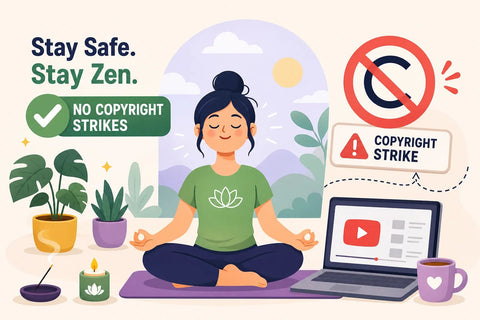
How do I avoid copyright strikes on my meditation YouTube channel? Learn Content ID basics, license proof tips, and a pre-upload checklist to keep your channel safe.

Constantly rushing through life degrades your work and drains your mental focus. Discover how slowing down restores your sharpest mind and start pacing yourself today!

A practical guide to choosing royalty-free music for sleep apps, including ambient sleep music, nature sounds, binaural beats, track length, looping, audio formats, and licensing.