The best music for a Pilates studio is calm, mostly instrumental, with a slow to medium beat, around 60 to 110 beats per minute depending on the class. Keep it quiet enough that clients can still hear the instructor and their own breath. Genre matters far less than three things: the tempo, how well the music stays in the background, and the volume. With Pilates, less is usually more.
Most studios get the basics right. They have a clear website, strong branding, good pilates studio software, and a clean space. Music is often the last thing anyone thinks about. Someone presses play on a random phone playlist, and that becomes the sound clients hear for a full hour. That is a missed chance. Music shapes how a class feels, how focused people stay, and whether they want to book again. It is worth a few minutes of real thought.

Why music matters in a class
Good music does quiet work in the background. Research on music and exercise, much of it led by sport psychologist Costas Karageorghis, points to a few clear effects:
-
It can make a workout feel easier. Studies suggest the right music can lower how hard people feel they are working by around 10 percent.
-
It lifts mood and helps people enjoy the session more.
-
It works like a soft metronome and helps people settle into a steady pace.
-
It sets the feel of the room and makes your studio sound like your studio.
Music will not fix a weak class. But it can make a good class feel better, and that feeling is what brings people back.
Do you even need music?
Not every class needs it. Some classical and clinical Pilates teachers prefer near silence so clients can focus fully on form and breath. That is a fair choice. If you do play music, treat it as a soft backdrop, not a soundtrack that takes over. A simple idea: run one class with gentle music and one without, then ask your clients which they liked.
The one rule that matters most
In Pilates, the music is not the star. The movement and the breath are. Your clients need to hear two things at all times: your voice and their own breathing.
This is what sets Pilates apart from a spin or dance class. You are cueing small, precise moves and breath patterns. If the music is loud or busy, your cues get lost and form slips. So choose music that sits under the class, not on top of it.
A quick test: if you have to raise your voice to be heard, the music is too loud or too busy.
Best tempo and genres by class type
Pilates is not one thing. A slow mat class and a fast reformer class need different sounds. Match the beat to the work. Here is a simple guide.
|
Class type |
How it feels |
Beats per minute |
Good genres |
|
Classical or mat |
Calm, steady, focused |
60-90 |
Ambient, soft piano, light electronic |
|
Reformer or flow |
Smooth and moving |
80-100 |
Downtempo, chillwave, acoustic |
|
Power or athletic |
More energy |
90-110 |
Organic house, deep house, upbeat downtempo |
|
Stretch or cool-down |
Very soft and slow |
50-70 |
Spa, soft drones, neo-classical |
A few notes:
-
Beats per minute (BPM) is just the speed of the music. Slower music suits slow, controlled work. A faster beat suits flowing or athletic work.
-
Instrumental music with no words can run a little faster than you expect and still feel calm.
-
Build the class like a story. Start soft, lift the energy in the middle, then bring it back down for the stretch at the end.
Genres that tend to work
These styles stay calm and rarely fight with your voice:
-
Ambient and soft electronic
-
Modern piano and strings (sometimes called neo-classical)
-
Downtempo, chillwave, and instrumental lo-fi
-
Spa music, nature sounds, and gentle drones for stretch and cool-down
-
Soft acoustic and gentle world music
What to avoid
-
Songs with strong lyrics, especially well-known ones. People stop listening to you and start singing along in their heads.
-
Sudden loud drops or big build-ups. They pull focus and can rush the movement.
-
Fast, hard dance music during slow mat work. The beat and the breath end up fighting.
-
The same short playlist on repeat. Regulars notice, and the studio starts to feel stale.
For most classes, instrumental tracks are the safest pick. With no words to follow, clients can stay with their breath and your cues.
Get the volume right
Volume is where many studios slip. Loud music feels exciting, but it does not help precise work, and over time it is hard on everyone's ears.
The World Health Organization treats about 85 decibels over an hour as the safe limit. Many fitness classes run well past that, sometimes 90 to 110 decibels. As the person in the room every day, you want it lower. A good rule from the fitness world: your voice should sit about 10 decibels above the music, so every cue is clear.
|
Volume |
What it sounds like |
Best for |
|
Under 70 dB |
Easy to talk over |
All-day teaching, slow mat, stretch |
|
70 to 85 dB |
Present but clear |
Most Pilates classes (keep your voice above it) |
|
Over 85 dB |
Too loud for an hour |
Avoid. It can harm hearing over time |
A free decibel app on your phone can check the level in seconds. Set it once, mark the spot on your speaker dial, and keep it there.
A quick note on music licensing
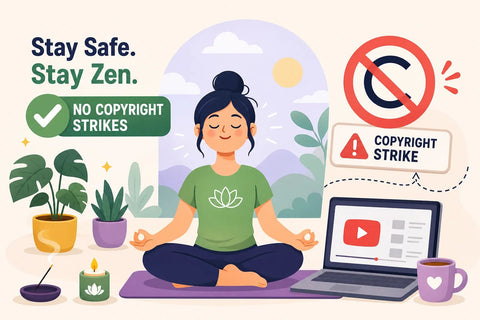
This part is easy to miss. A personal Spotify or Apple Music account is for home use, not for playing to a class. Their own rules say so, and playing music to clients counts as a "public performance." A private account does not cover you.
To stay safe, most studios pick one of these:
-
A music service built for businesses, which often includes the right licenses.
-
A blanket license from the music rights groups (in the US these are ASCAP, BMI, SESAC, and GMR).
-
Royalty-free music that is licensed for commercial use.
This is not legal advice, and the rules differ by country, so check what applies where you are. It is worth sorting out before a warning letter arrives.
Putting it together
You do not need the perfect playlist on day one. Start simple:
-
Pick instrumental music that matches the class type and beat in the table above.
-
Keep the volume low enough to hear your voice and the breath clearly.
-
Build a few playlists (slow, flow, and stretch) so you are not repeating the same songs.
-
Make sure your music is licensed for business use.
Good music in a Pilates studio is quiet, steady, and almost invisible. Most clients will never name the track. But they will notice that the class felt calm, focused, and easy to follow. That is the music doing its job.