Royalty-free meditation music is ambient or relaxing music (often instrumental) specifically licensed for meditation, yoga, or relaxation content. “Royalty-free” means you pay a one-time license fee and then can use the music repeatedly without paying additional per-use royalties. In practice, that means once you purchase the license, you’re free from ongoing fees, but the music is still copyrighted. You must always obey the license terms (for example, you cannot claim the music as your own or distribute the track by itself).

What Is Royalty-Free Meditation Music?
Meditation music typically consists of gentle, soothing sounds or nature-inspired ambient tracks used to support mindfulness and relaxation. When it’s sold royalty-free, you can incorporate this music into your projects after a single payment. In other words, you won’t owe the artist extra fees each time you use it. For example, you might buy a royalty-free meditation track to use as background music in a guided yoga video. After paying the one-time license fee, you can reuse that track as often as you like under the license rules.
Despite the name, royalty-free music is not free of copyright. The composer still owns it and you are simply granted a license to use it under agreed conditions. Typical royalty-free meditation music is instrumental and non-distracting, often including gentle chords, flutes, bells, or nature sounds to create a peaceful mood.
Why Royalty-Free Music Matters for Meditation Content
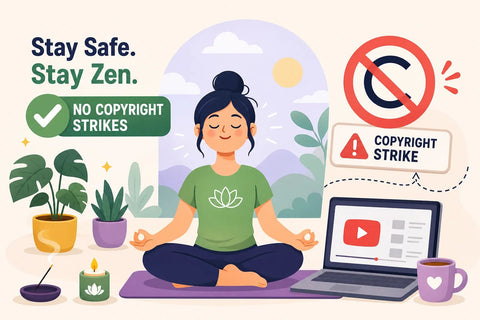
Using properly-licensed music is crucial for anyone producing meditation or wellness content. If you use music without permission, you risk copyright claims, video restrictions, and potential legal consequences under copyright law. Royalty-free music protects you legally by giving you clear permission to use the track. For example, on YouTube or social media, using copyrighted music without a license can lead to takedowns or demonetization. With a royalty-free license in hand, those risks vanish (as long as you follow the license).
Using royalty-free meditation music also simplifies licensing. Rather than negotiating complex rights for a popular song, you pay one fee for a ready-to-use track. Many meditation content creators appreciate this convenience. In short, royalty-free music lets you focus on creating soothing meditation videos, podcasts, or classes without worrying about licensing headaches.
Key reasons meditation instructors and content creators choose royalty-free music:
- Avoid copyright claims: Licensed tracks prevent YouTube or social platforms from flagging your video for infringement.
- Cost-effective: A one-time license is typically cheaper than licensing hit songs, and many libraries offer large libraries at affordable prices.
- Variety of styles: You get access to many genre-appropriate tracks (ambient, nature sounds, etc.) without repeatedly negotiating with artists.
- Ease of use: Most royalty-free licenses allow broad use (commercial or personal) once purchased.
How Royalty-Free Licensing Works
A royalty-free license is simply a permission slip for music use. You pay once and then are allowed to use the music according to the license terms. Key points about how it works:
- One-time payment, no recurring fees: After purchasing, you don’t owe the artist any more money per play or project. This distinguishes it from traditional licenses that might charge a fee each time a track is used.
- Copyright stays with the artist: The creator still owns the music. Your license does not transfer ownership. You simply have permission to use the track in ways spelled out by the license.
- Broad usage rights: Royalty-free licenses often cover multiple uses. For example, a single license may allow you to use the track in many videos, live classes, or products.
- Restrictions and prohibitions: Every license has limits. Common restrictions include no resale or distribution of the music itself. For instance, you generally cannot upload the track by itself to streaming platforms like Spotify, or make the raw file freely downloadable. Some licenses also forbid using the music to train AI models. Always check the “You can NOT” list of the license.
- Non-exclusive license: Most royalty-free tracks are sold non-exclusively (many people can license the same song). Exclusive deals are rare unless explicitly arranged.
In short, the license defines what’s allowed. Common allowed uses include background music in videos, apps, live events, and commercial projects (as long as that is permitted). Always review each library’s license agreement to know exactly what you can and cannot do with the music.
Typical Uses of Royalty-Free Meditation Music
Royalty-free meditation music is used in all kinds of wellness and creative projects. For example, you can legally include such music in:
- YouTube or social-media meditation videos: Many channels use royalty-free ambient tracks under licensing agreements.
- Guided meditation and yoga apps: Developers include meditation soundtracks in wellness apps or sleep apps.
- Audio products: Like mindfulness podcasts, relaxation or hypnosis recordings, and sleep soundtracks.
- Classes and live sessions: Yoga instructors or therapists play royalty-free music during in-person or virtual classes/therapy sessions.
- Commercial relaxation products: Such as spa background music, workout or therapy video series, or promotional content for wellness brands.
Music Of Wisdom's license examples illustrate these use cases: it specifically allows using tracks on a YouTube channel (even monetized), in guided meditation sessions, on apps, in podcasts, and in coaching or yoga classes. In practice, whenever you need calm background music for a meditation or mindfulness context – whether personal or commercial – royalty-free tracks from a reputable library are a legal choice.
Benefits of Using Royalty-Free Meditation Music
- Cost-effective, one-time fee: You pay once to use the music repeatedly, rather than negotiating multiple licenses or paying per play.
- Huge music libraries: Stock music platforms offer thousands of tracks. You can easily find the perfect ambient or nature-inspired piece for any meditation theme.
- Legal peace of mind: A proper license covers you for copyright. You won’t get DMCA strikes or takedowns if you comply with its terms.
- Saves time: No need to contact composers or clear rights individually. Licensing is straightforward — often done online by subscription or per track.
- Commercial use allowed: Most royalty-free licenses permit commercial use (selling courses, ads with the music, etc.) as long as you have the license.
- Unlimited projects: You can usually use the music in as many videos or events as you like (with one license), often even across different mediums (video, podcast, live).
Common Mistakes and Misconceptions
- Thinking “royalty-free” means “free.” Royalty-free music often must be purchased or obtained via a subscription. The term only means no ongoing royalties, not that it’s free of charge. Many creators fall into this trap, then unknowingly infringe by using a track without a proper license.
- Using consumer tracks illegally: Buying a CD or streaming a song (even ambient or meditation music) does not give you rights to use it in your content. You always need a license for public or commercial use of any copyrighted music.
- Believing it’s copyright-free: “Royalty-free” is not the same as “copyright-free” or public domain. Copyright stays with the artist. If you use royalty-free music without a license (or outside its terms), the creator can still sue you for infringement.
- Ignoring license details: Not all royalty-free licenses are identical. Some may require attribution (though most professional libraries do not). Some may restrict streaming or require a separate fee for certain uses. Always read the license. For example, many licenses explicitly ban uploading the bare audio track to music stores or letting others sublicense it.
- Trusting “free” sites blindly: Beware of sites claiming to offer free meditation music. Some use Creative Commons or even “public domain” labels incorrectly. If the site doesn’t clearly verify copyright status, you risk using a track still owned by someone.
- Overused tracks: Highly popular free or royalty-free tracks can become clichéd. For example, overused public domain sounds may even negatively affect YouTube monetization. Seek high-quality tracks even if they cost a bit more.
By understanding what royalty-free licenses do and do not allow, you avoid these mistakes and use meditation music legally and ethically.
FAQ
Q: Do I still need to credit the artist when using royalty-free music?
A: In most paid royalty-free licenses, attribution is not required unless the license explicitly says so. However, if you’re using music under Creative Commons (free) licenses, check the terms — many CC licenses require crediting the creator.
Q: Can I monetize my videos or apps with royalty-free meditation music?
A: Yes. Royalty-free licenses often allow commercial use, including monetized videos or paid products. Just be sure to confirm that the license covers commercial or profit-making use. Some free CC-licensed tracks might be non-commercial only.
Q: Can I use “royalty-free” meditation music for live classes or events?
A: Yes, many licenses allow playing the music in physical or virtual classes as background. For example, Music Of Wisdom’s license permits use in yoga or meditation classes (one location per license). Always check if there are any limits per location or class.
Q: What’s the difference between royalty-free, copyright-free, and public domain?
A: Royalty-free means you paid once for usage without further fees. Copyright-free is a misleading term; virtually all music is copyrighted unless explicitly released. Public domain means the work’s copyright has expired or been waived, so anyone can use it freely without any license. Creative Commons is another option: it’s free to use but usually has conditions (like attribution or non-commercial use).
Q: Can I claim Content ID or copyright on YouTube for royalty-free music I use?
A: No. You cannot claim ownership of a track you didn’t create.