The concept of yin and yang originates from within the Chinese philosophy of Taoism; it is discussed within the ancient text known as the I-Ching or book of changes. It can very simply be understood as the integration of opposites or duality that is the essential nature of our reality. Within this article, we will firstly gain a fuller understanding of the concept of Yin and Yang followed by considering some of the ways in which Yin and Yang can be applied in the present wit in our everyday life.
Understanding Yin and Yang
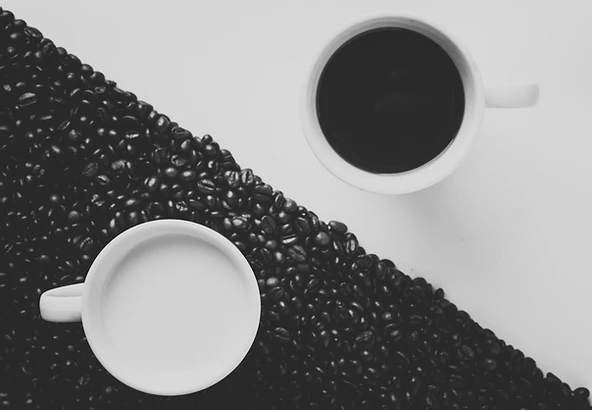
The concept or philosophy of Yin and Yang is commonly known through its symbolic representation. The Yin Yang symbol is a circle divided into two parts by a curving line. The Yin part of the circle is black with a dot of white within and the Yang is white with a dot of black within. The dots represent that each side carries the seed of each other and each half of the circle is essential to creating the full circle. This symbol is a powerful visual representation of the concept. Yin and Yang are inextricably intertwined; both are essential or necessary for each other. Yin Yang is also associated with Taiji which is a Chinese philosophy that is an internal practice that includes the understanding that the dance of Yin and Yang springs from an infinite oneness, chi or source.
We can more fully understand the interdependence and peaceful co-existence of these opposing elements by looking at some of the elements of existence that are classified as Yin or Yang:
Yin
- Feminine energy
- Darkness
- Mystery
- Passive, Receptive
- Soft
- Negative space
- Organic
- Earth
- Moon
Yang
- Masculine energy
- Light, Illumination
- Clarity
- Active, action
- Hard
- Physical, Objects
- Heaven
- Sun
These various elements of life that are considered Yin or Yang are intertwined, for example, both masculine(Yang) and feminine(Yin) together can create life, darkness(Yin) is the absence of light(Yang), physical objects(Yang) are able to be experienced in relation to negative space(Yin). Yang is born from Yin, Yin follows Yang, and everything in this world is a mixture of Yin and Yang. The understanding of this peaceful co-existence of opposites and knowing that both are essential or necessary to each other is the philosophy of Yin Yang
Yin and Yang in Everyday Life
This section of the article will consider some practical ways that the understanding of Yin and Yang can be applied within daily life. A conscious awareness of the concept of Yin and Yang can cultivate a deeper and more embodied understanding of the balance and necessity of duality that is the nature of life.
- We can actively be aware of the Yin and Yang elements in our lives and through contemplation or meditation we can observe how these elements are connected and essential to each other.
- Yin and Yang can be embodied by intentionally engaging in the practice of daily breathwork. Intentional deep breathing or paying attention to the nature of the breath offers an easy and valuable opportunity to balance Yin and Yang energy. Inhalation is considered to be Yang and exhalation is considered to be Yin. The breath clearly demonstrates the inextricable connection of Yin and Yang energy, without an inhale there can be no exhale and without and exhale there can be no inhalation.
- Yin and Yang can be embodied by intentionally maintaining a balance of structure and relaxation in daily life. In the fast-paced and hard-working modern society and mental state that surrounds most of us; Yin Yang philosophy reminds us of an important balance that needs to be maintained in order to experience a natural state of wellbeing. Actively valuing the importance of rest and relaxation (Yin) as much and action and productivity (Yang) is a beneficial way to embody the balance of Yin and Yang.
- Yin and Yang philosophy teaches us a valuable lesson that can assist us with dealing with the happenings of daily life with more understanding and composure. This lesson is the acceptance of duality, the acceptance of what is, be it a seemingly a negative (Yin) or positive (Yang) experience. Yin and Yang help us to know that at a fundamental level the experiences of good and bad are interconnected. This balance of opposites is an essential structure of the energy of life.
- Awareness of Ying and Yang balance can be applied to maintaining health and vitality .It forms an essential part of Chinese medicine, it is used as a means of diagnosis and is associated with specific organs and specific herbal remedies. The balance Yin and Yang can affect the health on both physical and energetic levels. An example of the consideration of Yin and Yang within the body is when the body is either too hot (Yang) or too cold (Yin), this can be caused by eating certain types of foods or other lifestyle imbalances and can adversely affect the health of the body causing illnesses. A balance of Yin and Yang energy within the body is needed to maintain a natural state of good health
The considerations of Yin and Yang within our daily lives are actually endless due to the fact that everything we interact with and the ways that we interact are imbued with Yin or Yang energy at their very essence. We can greatly benefit on physical, mental, emotional and spiritual levels through understanding and integrating Yin and Yang wisdom within our daily lives. An embodiment of Yin Yang wisdom can effect benefits such as experiencing greater balance, refined awareness and generally more skillful navigation through human existence in each present moment.
__Written by Music Of Wisdom team
Follow Us:
Insight Timer | YouTube | Facebook | LinkedIn | Instagram